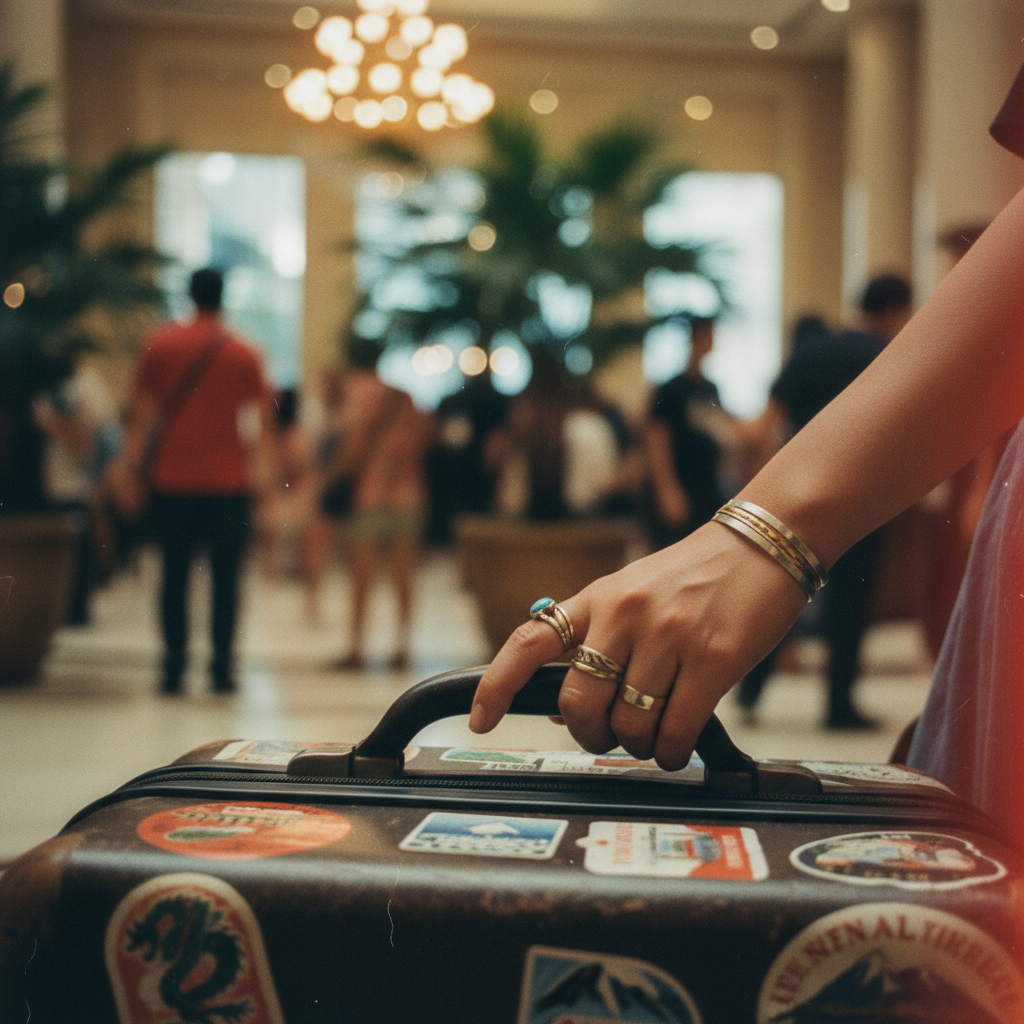
The physical hotel room key is on its way out, and the industry's own numbers back up why a guest’s phone is the new standard for hotel room access. In a global study of over 5,000 travellers and 600 hotel executives, Oracle Hospitality and Skift found that 62% of hoteliers expected a fully contactless experience, covering check-in, check-out and room entry, to become the most widely adopted hotel technology within three years (Oracle, 2022). Three years on, that prediction is playing out on a global scale.
Whitbread, the organisation that owns Premier Inn, is one of the clearest examples of widespread adoption at scale. It has partnered with guest experience platform Alliants to roll digital keys out across more than 95,000 Premier Inn rooms in the UK and Germany, letting guests add their room key straight to Apple Wallet or Google Wallet for contactless entry alongside a faster check-in.
Credit cards, boarding passes, concert tickets, even car keys; guests already carry all of it on their phone. The room key was always going to be next for companies like Whitbread. Here's what's actually behind that shift, and what it takes to get Digital Keys right.
This isn't a sudden shift; it's a quiet one that has been happening for years. Back in the early 2020s, contactless and digital key adoption was meant mainly as a safety and security measure as the world opened back up after the global pandemic. By 2022, NYU’s Tisch Centre for Hospitality reported a 66% increase in contactless check-in technology adoption (NYU, 2022). Now that the three-year gap has closed, the industry is finally catching up to what guests said they’ve always wanted, not the other way round.
More recent research shows guests have put even more pressure on hoteliers to adopt digital key and contactless check-in solutions. HotelTechReport's 2025 State of Hotel Guest Tech Report, based on a global survey of 402 recent hotel guests, found that almost half already prefer to check out using their smartphone (HotelTechReport, 2025). This preference runs even deeper among luxury travellers, 43% of whom say they expect not to wait in line at all when arriving at a hotel.
Set that insight alongside what's happening on the ground level at the lobby: guests at Alliants properties are activating a digital key the moment digital check-in is available to them, and the pattern holds at every level. Guests wanted this before most hotels built it. Now that it exists, they're clamouring to use it. For instance, over half of group and convention guests at Resorts World Las Vegas adopt digital keys and contactless check-ins to skip the line without skipping the welcome Resorts World is known for.
A hotel digital key is a room credential added to your phone's wallet app, read by a Near Field Communication (NFC) reader built into the door lock, the same short-range wireless technology behind contactless payments. It sits alongside your boarding passes and loyalty cards in Apple Wallet or Google Wallet. Unlock the door by holding your phone or watch near the reader on the lock, the same motion as tapping a card at a till.
The NFC reader is the part guests never think about, and yet it's doing most of the work. It has to sit on the lock itself, be certified against Apple's and Google's wallet standards, and, because NFC only operates at very short range, respond only when the phone is genuinely inches away. That short range isn't a limitation. It's a deliberate security feature: a digital key can't be read from across a hallway the way some legacy RFID cards can.
The clearest evidence is what happens once a guest actually tries a Digital Key. Across Alliants properties offering both digital check-in and digital key, once a guest completes contactless check-in, a majority go on to activate the key in the same flow: 80.7% of guests at larger hotels and resorts (500+ rooms), 75.9% at medium-sized properties (150-500 rooms), and 59.5% at smaller properties (50-150 rooms) all adopt digital keys instead of waiting at a front desk for a physical one.
Once a guest tries contactless check-in, they implicitly trust the digital key that comes with it. The harder job isn't convincing guests to use a digital key; it's getting them into contactless check-in in the first place. This is why speed of both the check-in and the digital key provisioning is how that trust holds. Alliants customers complete digital check-in in well under a minute at some properties, 42 seconds at easyHotel, just over a minute at Mollie's, and around three minutes even at a large-scale resort property like Resorts World Las Vegas. This kind of timing is critical. Research from Cornell's Centre for Hospitality Research, corroborated by J.D. Power data, found that American guests' satisfaction scores drop sharply once a check-in wait passes five minutes (Cornell/J.D. Power).
That's really the bigger shift: a digital key creates a digital relationship with the guest, not just a transaction. A physical keycard is handed over, or sometimes not, and forgotten the moment checkout ends. A digital key lives inside the same wallet app the guest uses every day, especially if the key was actually issued as a Member Pass. When done in this way, the hotel brand stays present on their phone long after the stay is over.
The industry's own recent history makes the case. In 2024, a security researcher documented a hardware backdoor in a widely used RFID chip that let a cloned card open a door in minutes; the affected chips have turned up in hotels across the US, Europe, and India (SecurityWeek, August 2024). A digital key with Alliants works differently:
Hotel digital keys have moved past the pilot stage. For a growing number of major chains, this is now an estate-wide infrastructure decision, not a novelty reserved for flagship properties or solely a security measure. The data backs that up: guests already expected this three years ago, and the adoption numbers now coming out of live properties show guests followed through once given the chance.
Done well, a digital key does four things at once:
That combination, not the simple novelty of tapping a phone against a door, is why a digital key ecosystem stopped being optional. Hotels aren't pioneering anything new; they're catching up to an exponentially higher demand. Mobile boarding passes, mobile payments and mobile loyalty cards have been standard consumer expectations for well over a decade; the room key is simply the last physical object hospitality hadn't yet let go of.